If you have been researching early childhood education in Mirzapur, you have probably come across the word Montessori. And if you are wondering whether it is just a trend or whether it actually makes a real difference to how children grow and learn, this guide will give you a clear, practical answer.
At New Mirzapur Public School, early learning is taken seriously, and the principles behind quality early education are embedded in how teachers approach every classroom interaction.
If you want your child to begin their education at the best school in Mirzapur, reach out to NMPS today to know more.
The Montessori method was developed by Dr. Maria Montessori, an Italian educator, in the early twentieth century. In a Montessori-influenced classroom, children are given the freedom to explore, choose activities that interest them, work at their own pace, and learn through direct experience. The teacher acts more as a guide than a lecturer. The environment is carefully designed to invite curiosity and hands-on engagement.
This might sound simple, but the impact on child development is significant and well-documented.
Most of us grew up in classrooms where we sat in rows, listened to a teacher talk, memorised answers, and reproduced them in exams. Many of us did fine. But research over the past few decades has consistently shown that children who learn through exploration, problem-solving, and self-directed activity retain knowledge better, develop stronger critical thinking, and are better prepared for the real-world demands of work and life.
For parents choosing a Primary school Mirzapur children will attend through the formative early years, this matters. The habits of mind that children develop between ages 3 and 8 tend to stay with them. A school that builds curiosity and confidence at this stage gives children a foundation that no amount of tuition or coaching can easily replicate later.
1. Children Learn at Their Own Pace
Not every child is ready to read at the same age, or to understand addition at the same speed. Montessori-style education allows children to progress when they are developmentally ready, rather than being pushed forward by a rigid timetable.
2. Hands-On Learning Builds Deeper Understanding
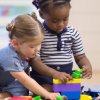
In a quality kids school Mirzapur parents trust for early education, children should be touching, building, sorting, observing, and creating, not just listening and copying. Hands-on activities activate multiple areas of the brain and help children form stronger, longer-lasting connections to concepts.
3. Independence and Responsibility Are Built Early
Children in Montessori environments are taught to manage their own materials, make choices about their learning activities, and take care of their immediate environment.
4. Social Skills Develop Naturally
When children of mixed ages work together in a structured but flexible environment, they naturally develop empathy, cooperation, and communication skills. This kind of social learning is something that rigid, grade-only structures often miss.
5. A Love of Learning Is Preserved
Most children arrive at school genuinely curious and excited. The tragedy of the wrong educational environment is that this curiosity gets slowly extinguished by pressure, comparison, and rote work. Montessori-style teaching actively protects and nurtures that natural love of learning, which is one of the most valuable gifts an early education can give.
At New Mirzapur Public School, the early childhood program is designed with exactly these principles in mind. As a Top school in Mirzapur, NMPS combines structured academic learning with activity-based methods, concept clarity, and genuine individual attention.
Teachers at NMPS are trained to observe children carefully and respond to individual learning styles, rather than delivering one-size-fits-all instruction. The classrooms are designed as school in Mirzapur UP parents consistently describe as warm and engaging, where children look forward to coming in every morning.
As an english medium school Mirzapur families rely on for strong language foundations, NMPS also ensures that early literacy in English is developed naturally through stories, conversation, songs, and activities, not through mechanical drilling.
The earlier, the better. Brain development research consistently shows that the years between 2 and 7 are the most critical for laying cognitive, emotional, and social foundations. Enrolling your child in a quality early education programme during this window gives them the maximum developmental benefit.
If your child is ready for Nursery, KG, or even the Playgroup stage, this is the right time to act.
Visit nmpsmirzapur.com to learn more about the early childhood programme at New Mirzapur Public School and to submit an enquiry for the 2026 session.
Q1. What is Montessori education in simple terms?
Ans. Montessori education is a child-centred approach where children learn through hands-on activities, exploration, and self-directed learning.
Q2. Is Montessori better than traditional schooling?
Ans. Montessori is particularly effective in early years as it builds independence, creativity, and critical thinking, though the best choice depends on your child.
Q3. At what age should a child start Montessori education?
Ans. Children can start as early as 2–3 years in playgroup or pre-nursery programmes.
Q4. Does Montessori help in academic performance later?
Ans. Yes, children often develop stronger problem-solving skills, focus, and conceptual understanding, which supports long-term academic success.
Q5. How do Montessori classrooms differ from regular classrooms?
Ans. They are activity-based, flexible, and designed for exploration rather than rigid, lecture-based teaching.